There are many aspects of home design that can make your personal landscape stand out with added charm and ambiance. Some of these elements have the additional benefit of protecting certain areas of your landscape as well – your gardens, walkways, and more. One landscaping option that offers both beauty and protection is the retaining wall.
This article will give you the run-down on retaining walls and their various applications, so that you can decide if this option is right for you.
What is a retaining wall?
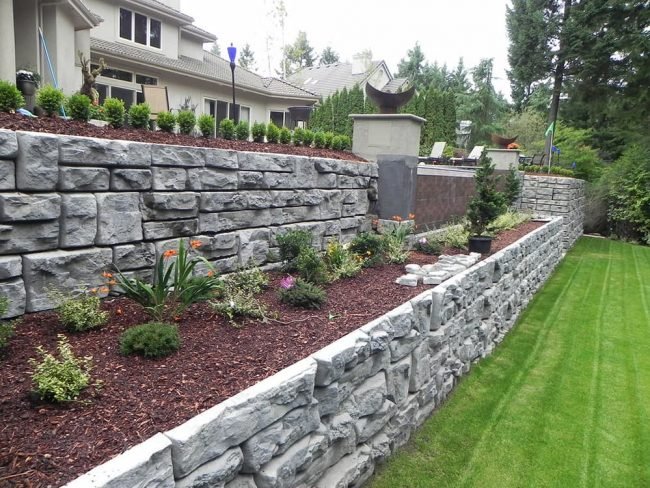
Retaining walls can be found in all shapes and sizes, and are used everywhere from patios to highways. Their basic function is to support land structures that would otherwise eventually erode away or run the risk of collapsing.
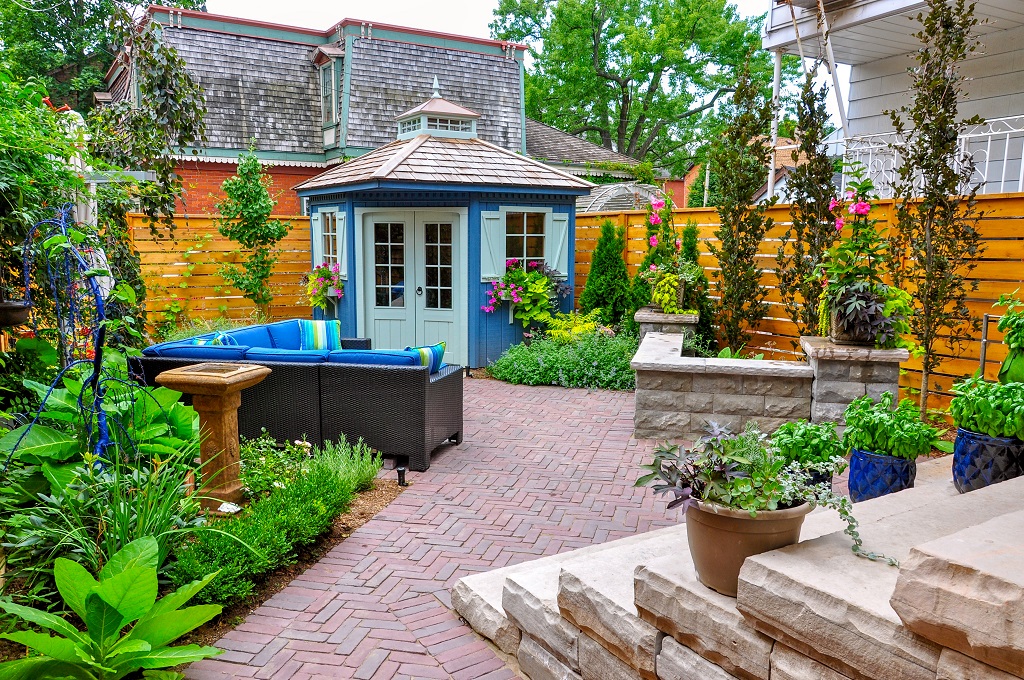
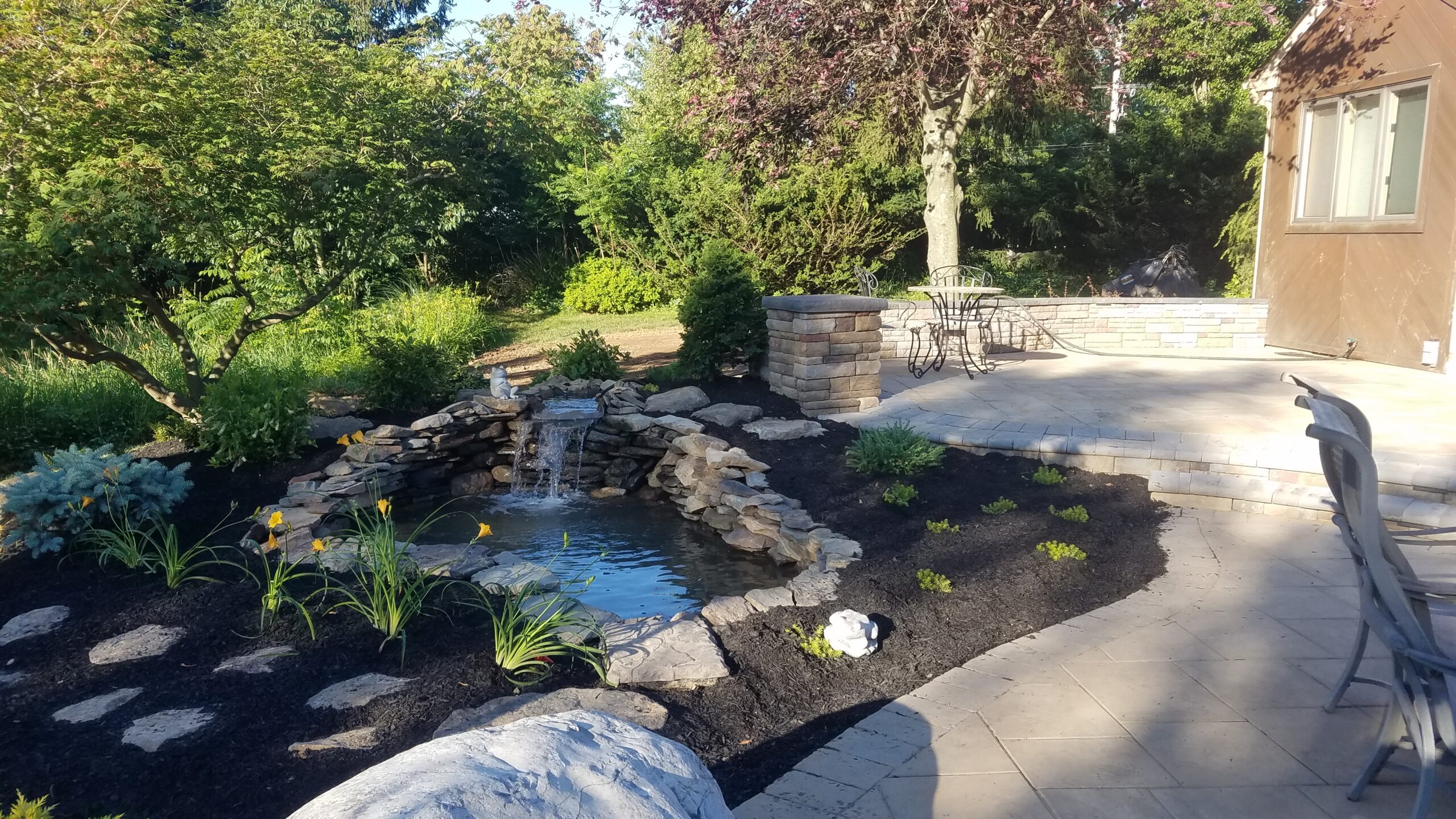
Yards aren’t always completely flat – some contain slopes and inclines that, while adding interest to the overall feel of your home’s exterior, may pose some challenges when you are trying to utilize the space effectively. Retaining walls are a great way to maintain the safety of your landscape, add even more visual interest, and even provide a place to sit. Here are the most common uses for retaining walls in a home setting:
- Walkout basements
- Sunken patios
- Tiered gardens
- Simple visual interest
What are your material options?
As with many other renovation projects, homeowners have a wide range of options to choose from when it comes to the look and feel of retaining walls on their property. These include:
- Concrete
- Stone
- Brick
- Copper
- Drystone
A professional landscaper will be able to tell you their expert opinion as to the best material option for your specific needs. They will communicate the benefits and risks associated with each option, as well.
The installation process
Once you’ve worked with a professional to decide on the location and material for your retaining wall(s), they can begin the installation process. It’s important to remember some potential issues that may occur before the job can be completed – for example, if tree roots are discovered where the base of the wall is supposed to go, those would need to be removed. In some cases, a frost footing may need to be dug to prevent the structural consequences of extreme cold that could show themselves in the wintertime and damage your retaining wall.
Importance of checking local regulations
Become acquainted with your local building authority before you decide to install retaining walls on your property. While they serve several useful purposes, retaining walls can also change the flow of rainwater and could prove to be hazardous during heavy snowfall when visibility is impeded. Whether or not you are allowed to have a retaining wall on your property should be the very first question you investigate.
Whether you’re looking to accentuate a raised area of land, build a patio structure, or simply protect a garden or other area, a retaining wall can get the job done in style. In our next article, we’ll explore the specific retaining wall models that you have to choose from.
Retaining walls are just one design choice that Modern Landscapes can bring to life for Pennsylvania homeowners. We have earned the respect of those looking to add charm to their home through our state of the art landscaping and hardscaping jobs — handling trees, lawns, light fixtures, irrigation systems, patios, and much more. Visit our website to browse our gallery, or give us a call today to get started.