
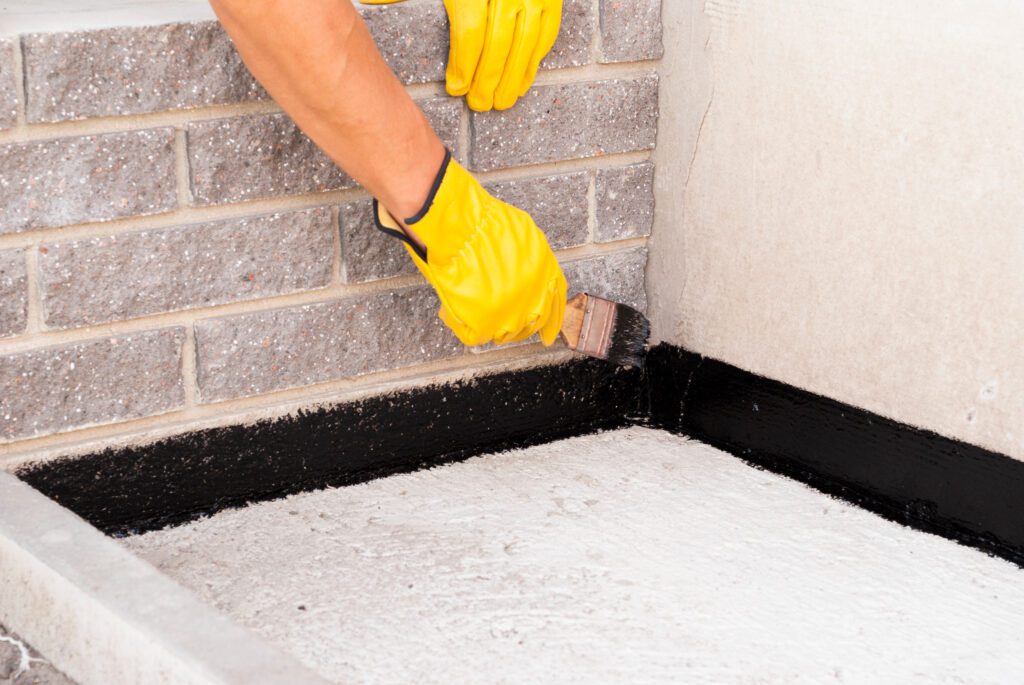
Many homeowners think of waterproofing and have misconceptions about the practicality of this process. Whether or not you live in a flood-prone area, waterproofing should be at the top of your list of health and safety concerns. Even in the summertime, water can become a hazard anywhere from the basement level to the roof of your home.
Waterproofing the foundation of your home is especially important during the construction process, but some homeowners may need to revisit this task after their home is already built. Read on to learn more about the importance of waterproofing.
Damp-proofing: a deceptive difference
There is a key oversight that unfortunately impacts many homeowners in the years or months after they build their home.
While many installation or construction services may appear to offer waterproofing for foundations, what they actually offer is called damp-proofing. Like waterproofing, damp-proofing involves spraying a protective layer to a foundation, such as liquid asphalt. This does offer some resistance to water from different sources – but not enough. This option may meet local building codes, but it does not provide a tight enough barrier from the years-long accumulation of groundwater that will eventually seep through and cause damage.
How does water damage a home’s structure?
Without a solid waterproofing job, water can enter and damage the foundation of a home in a few different ways. Concrete is durable, so it is the most commonly-used material for home foundations – but as strong as it is, it’s also generally very susceptible to water vapor. Large amounts of water that accumulate during heavy storms can also easily wet concrete foundations that are unprotected.
Water damage brings two main concerns:
- Water movement involves the collection and transfer of salt deposits, such as the ones found in concrete. If water makes its way into the foundation, it can erode the concrete’s structure, which is a serious safety concern.
- Mold is the most common – and the most dangerous – type of water damage. Mold growth occurs over time as moisture seeps through the soil and into a home’s foundation, and is the culprit responsible for a slew of health issues.
Waterproofing after a home is built
If your home has been around for a number of years, you think it may be too late to move beyond damp-proofing. Think again – there are multiple options for waterproofing a home without ripping apart its structure, including both interior and exterior waterproofing measures. A solid water management system, including gutters and water collection areas, is a great waterproofing solution. Any selected waterproofing job will raise the value of your home.
If you are realizing that your home may be susceptible to mold and structural damage from a lack of waterproofing, contact your local expert today to assure safety for you and your family in the long run.
Modern Landscapes offers interior and exterior waterproofing solutions, as well as services to fix foundations where damage has already occurred. You can trust our team to deliver high quality results in a timely manner. Our services extend beyond waterproofing – install hardscaping and landscaping features that provide safety, functionality, and fun. Set up a consultation with us today to learn more about how we can help.